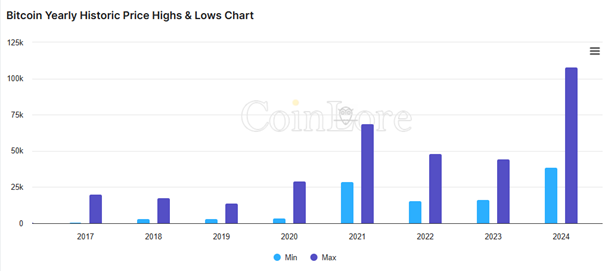
2024 was the year that the structural barriers separating traditional finance from cryptocurrency finally began to fall. The launch of spot Bitcoin ETFs in January, the approval of spot Ethereum ETFs in July, the completion of Bitcoin's fourth halving in April, and the continued maturation of the stablecoin market collectively moved crypto from an asset class that institutional investors monitored to one they actively allocated to — a transition with lasting implications for markets in the Middle East, South Asia, and beyond.
From the perspective of emerging-market crypto participants, 2024 was paradoxically both a validation year and a complication year. Institutional inflows through regulated ETF channels pushed Bitcoin to new all-time highs above $100,000, creating wealth effects for regional holders. Simultaneously, growing institutional presence intensified regulatory pressure globally, with jurisdictions from the UAE to Pakistan accelerating their frameworks to capture the incoming institutional wave on their own terms.
The UAE deepened its position as the regional hub for institutional crypto in 2024, with ADGM and DIFC frameworks attracting exchange licenses, custody providers, and fund managers from across the global crypto industry. The Bitcoin ETF inflows from Gulf sovereign wealth funds and family offices — while not publicly disclosed — were widely reported as a significant component of early institutional demand. By year-end, Bitcoin's position as a legitimate portfolio allocation for institutional investors in the Gulf was no longer a theoretical proposition but an observed market reality.
For Pakistan, India, and Vietnam — markets defined by high retail crypto adoption rather than institutional flows — 2024's most relevant development was the stablecoin market's evolution. USDT's continued dominance on TRON and its growing supply provided the dollar-denominated liquidity that underpins remittance and trading activity in all three markets. The T3 FCU's formation also signaled that the TRON-USDT combination was making compliance investments that might reduce exchange-level restrictions over time.
By December 2024, Bitcoin had crossed $100,000 for the first time and was approaching $108,000 ahead of the Trump inauguration in January 2025. The political shift in U.S. crypto policy — from adversarial SEC enforcement to a White House publicly supportive of digital assets — was being priced into markets as the year closed. For investors across the Middle East and South Asia who had accumulated positions through 2023's lows, 2024's institutional arrival provided the exit liquidity and price discovery that transformed paper gains into realized returns.
"2024 did not make crypto mainstream — it made crypto acceptable to the mainstream financial system. That is a different and in some ways more durable achievement."
— Digital asset portfolio manager
Keywords: 2024 crypto review, Bitcoin ETF, Ethereum ETF, Bitcoin halving, institutional crypto, stablecoin market
Source: legacy