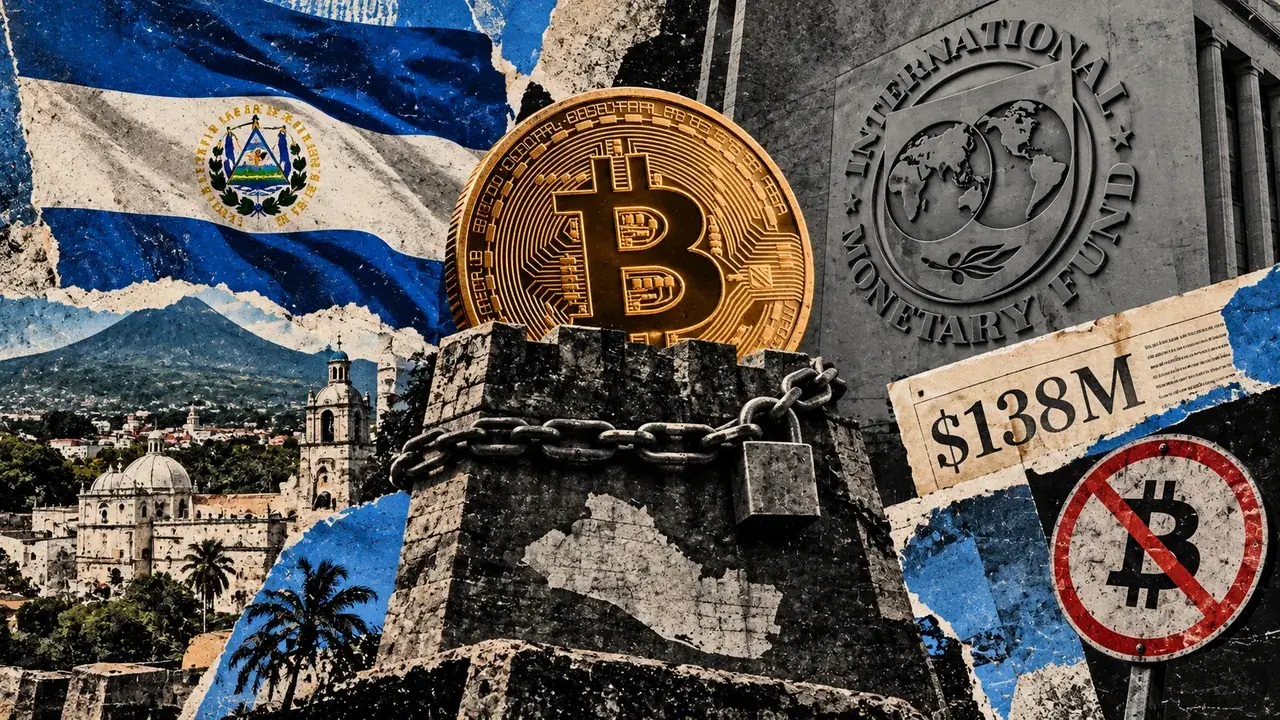
El Salvador has kept its IMF lifeline open without winning any new room to buy Bitcoin. On Oct. 1 the Fund's board completed the second and third reviews of the country's $1.4 billion loan programme, releasing $138 million (SDR 101.96 million) immediately and granting waivers for missed performance criteria tied to Bitcoin accumulation.
For investors who track emerging-market sovereign risk, the signal is straightforward. The IMF is prepared to forgive past slippage when authorities take corrective steps and renew their commitments, but it is not softening the rule underneath. No further accumulation is envisaged beyond documented donations, so publicly funded Bitcoin purchases stay off the table while the programme runs.
A waiver is a procedural fix, not a policy shift. It lets the disbursement proceed even though earlier targets were missed, and it leaves the programme's direction on Bitcoin exactly where it was. Think of it as a yellow card rather than a rule change: the government keeps playing, but the referee has now put the behaviour on record.
The reserve itself remains large. El Salvador holds about 7,794.37 Bitcoin, worth roughly $666.1 million at the time of reporting. Because that balance is marked to market, a higher Bitcoin price lifts the headline value of the holdings even when the state is not buying anything, which is a useful reminder that a bigger reserve number and a bigger buying programme are not the same thing.
The Fund has drawn a clear distinction between Bitcoin acquired with public money and coins received through documented donations. That distinction is now the hinge of the whole arrangement. Reserve balances can still rise without signalling that President Nayib Bukele's government has resumed purchases, provided the additions can be traced to documented gifts.
The difficulty is that additions to government-linked wallets have, by the reporting, appeared inconsistent with the IMF agreement. That puts the burden of proof on the authorities. Every unexplained uptick in the balance becomes a question the Fund can ask at the next review, and the answer needs a paper trail rather than a press statement.
The Bitcoin position is no longer just a treasury choice. Inside an IMF programme it is a reporting obligation.
Bitcoin is only one strand of a broader review. The IMF said fiscal consolidation is advancing broadly in line with programme goals and that reserve and liquidity targets were comfortably met. The 40-month Extended Fund Facility was approved in February 2025 and is meant to support fiscal adjustment, stronger reserves and financial-sector reforms.
On the crypto side, the Fund pointed to progress in reducing the state's direct role. The government has transferred majority ownership and control of the Chivo wallet to a private operator, but the IMF still wants any remaining public-sector exposure fully unwound. The outstanding asks are specific:
The practical test is documentation. Future reviews will hinge partly on whether El Salvador can show how its Bitcoin balance changes while finishing the Chivo unwind and the transparency reforms. Any accumulation that cannot be explained could again push the government to seek waivers before the next tranche of financing is released.
For readers weighing frontier-market exposure, the takeaway is that sovereign Bitcoin strategies do not exist in isolation from creditor conditions. El Salvador's reserve is real and growing in dollar terms, but its room to expand it with public funds is capped by an external lender with a long memory. Treat disclosure quality, not headline holdings, as the better indicator of how smoothly the programme will keep running.
Keywords: El Salvador, IMF, Bitcoin reserve, Bukele, Chivo wallet, sovereign Bitcoin, emerging markets, Latin America
Source: CryptoSlate