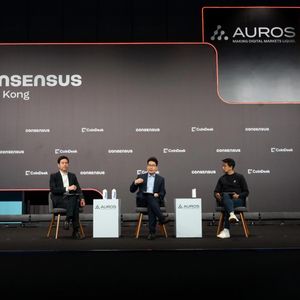
Hong Kong officials at Consensus Hong Kong 2026 maintained the city's commitment to digital asset development while candidly acknowledging that the UAE's regulatory aggression had reshaped competitive dynamics in the global crypto hub landscape. Joseph Chan, Hong Kong's undersecretary for financial services, and lawmaker Johnny Ng articulated a clear-eyed view of the competitive environment: Hong Kong's advantage lies in regulatory predictability, while Dubai and Abu Dhabi have captured market share through the speed and single-window simplicity of their virtual asset regulatory frameworks.
The acknowledgment of UAE competition is significant. For years, Hong Kong positioned itself as the natural crypto hub for Asia — a common-law jurisdiction with deep financial infrastructure, access to mainland Chinese capital, and a sophisticated regulatory capability built on decades of financial market experience. The UAE's emergence as a credible alternative — with lighter-touch regulation, no capital gains tax, and a rapidly expanding population of crypto-native firms — has forced Hong Kong to articulate its value proposition more precisely.
Ng's characterization of the UAE as "really aggressive" in pursuing crypto-friendly policies reflects a qualitative difference in regulatory posture. The UAE has not merely created permissive rules — it has actively recruited crypto firms with incentive packages, fast-tracked licenses, and provided direct government engagement that Hong Kong's more bureaucratic framework struggles to match. South Korea, cited alongside the UAE as an aggressive competitor, has similarly established a dedicated government body for crypto oversight — a model that provides crypto firms with a clear institutional interlocutor that Hong Kong's multi-regulator coordination structure does not replicate cleanly.
"Dubai and Abu Dhabi have established a solid regulatory framework for virtual assets, and each region has brought this under the auspices of a single, dedicated regulatory authority."
— Johnny Ng, Hong Kong lawmaker, at Consensus Hong Kong 2026
The Hong Kong-UAE competition has practical consequences for how crypto capital and talent allocate across Asia and the Middle East. Firms that prioritize regulatory clarity and established financial infrastructure choose Hong Kong; firms that prioritize speed, tax efficiency, and the UAE's rapidly growing local crypto market choose Dubai or Abu Dhabi. The result is a bifurcated market: Hong Kong captures the institutional and mainland China-adjacent segment; the UAE captures the global retail platform, regional trading, and crypto-native firm segment.
For South Asian investors and operators — India, Pakistan, and Sri Lanka — the Hong Kong-UAE dynamic creates optionality. The UAE's proximity, cultural ties, and labor migration relationships make Dubai the natural regional hub for South Asian crypto activity, while Hong Kong's institutional depth provides an alternative for larger capital allocations requiring common-law legal frameworks and established banking relationships.
Keywords: Hong Kong crypto, UAE crypto regulation, digital asset hub, VATP licensing, ADGM DIFC, Asia crypto competition
Source: CoinDesk